
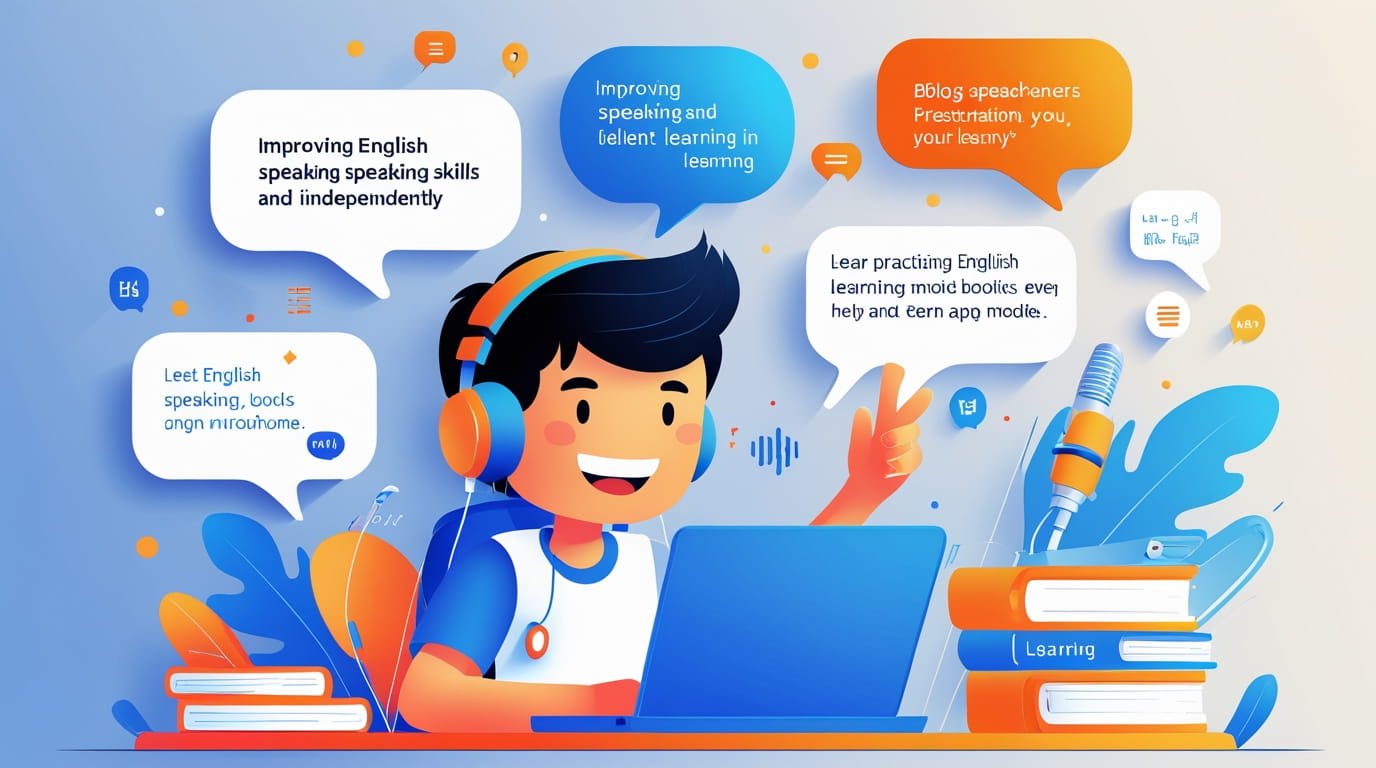
How to Improve English Speaking Skills Without Joining a Class
We’ve all been there. You are watching a movie or reading a blog post in English, and you understand every single word. You nod along, feeling confident, thinking, "Hey, I’m actually pretty good at this!" But then, the moment comes when you actually have to open your mouth to speak. Maybe a tourist asks you for directions, or you’re in a Zoom meeting with international colleagues. Suddenly, your brain freezes. The words are there, floating somewhere in your head, but your tongue feels like it’s tied in a knot. You stutter, you panic, and you end up saying something simple like "Yes, good" instead of the eloquent sentence you had planned.
It’s frustrating, isn't it? The gap between knowing a language and speaking it can feel like a canyon. Most people assume the only bridge across that canyon is an expensive course or a strict teacher correcting your grammar every five seconds. But let’s be real: classes can be boring, expensive, and often don't simulate real life. The good news is that you don't need a classroom to become fluent. In fact, some of the best English speakers I know learned by themselves, in their pajamas, just by tweaking their daily habits. Speaking is a physical skill, like learning to ride a bike or play the guitar. You don't learn to ride a bike by reading a textbook about physics; you learn by getting on the bike and pedaling.
The "Perfectionist" Trap You Need to Escape
Before we dive into the specific techniques, we need to address the biggest elephant in the room: your mindset. The number one reason people fail to improve their speaking skills isn't a lack of vocabulary; it’s fear. It’s the paralyzing fear of making a mistake. We are conditioned by years of school exams to think that if we use the wrong verb tense or forget an article, we have "failed."
Here is the truth that might liberate you: native speakers make mistakes all the time. They mumble, they use slang, they ignore grammar rules, and they restart sentences halfway through. Communication is about connection, not perfection. If you are waiting until you speak perfectly before you open your mouth, you will be silent forever. You have to be willing to sound a little bit silly. You have to be willing to sound like a toddler for a while. Once you accept that mistakes are just data points evidence that you are trying the process becomes so much faster. Stop trying to impress the "grammar police" in your head and start trying to just get your point across. Fluency is about flow, not accuracy. Accuracy comes later; flow comes first.
The Power of "Shadowing" (It’s Not Just Repeating)
So, how do you practice speaking if you have no one to speak to? Enter the "Shadowing" technique. This is widely considered the secret weapon of polyglots. It’s different from just listening and repeating. In a traditional class, the teacher says "The cat is on the table," and you wait, and then you say "The cat is on the table." Shadowing is much more aggressive.
You find a piece of audio a podcast, a YouTube video, a TED Talk with a transcript. You play the audio, and you try to speak simultaneously with the speaker. You are like a shadow, following them instantly. You don't wait for them to finish the sentence. You mimic their speed, their pauses, their intonation, and even their emotion. If they sound angry, you sound angry. If they whisper, you whisper.
Why does this work? Because English is a stress-timed language. It has a rhythm, like music. When we learn from textbooks, we learn robotically. Shadowing forces your mouth muscles to move at a native speed. It forces you to connect words together (what linguists call "connected speech") rather than pronouncing each word individually. It feels incredibly awkward at first you will stumble and trip over your tongue but if you do this for just ten minutes a day, you will notice your pronunciation tightening up within weeks.
Become the Narrator of Your Own Life
This next tip might make you look a little crazy if you do it in public, so maybe keep this one for when you’re home alone. Start narrating your life. Literally, talk to yourself. When you wake up in the morning, say out loud, "Okay, I am getting out of bed now. It’s a bit cold today. I think I’ll make coffee before I brush my teeth."
It sounds simplistic, but here is why it’s powerful: it connects your daily actions directly to English vocabulary without the pressure of a conversation. You are creating a low-stakes environment. If you realize you don't know the word for "kettle" or "faucet" while you are narrating, you can look it up right then and there. Because you learned that word in a relevant context (while actually using the object), you are much more likely to remember it than if you studied it on a flashcard.
You can take this a step further by arguing with yourself. Pick a topic like, "Is pizza the best food?" and try to debate it out loud while you’re in the shower. "Well, pizza is delicious, but it’s not very healthy. On the other hand, it has cheese." This forces you to construct arguments and use connecting words like "however," "although," and "therefore" in a spontaneous way.
Breaking the "Translation" Habit in Your Brain
The biggest barrier to fluency is the "Translation Loop." This is when you hear a sentence in English, your brain translates it into your native language to understand it, you formulate a reply in your native language, and then you translate it back into English to speak. This process is slow, exhausting, and usually leads to awkward phrasing because languages don't map onto each other perfectly.
To stop this, you need to start thinking in English. I know, easier said than done. But you can start small. Start with objects. Look around your room right now. Don't look at a table and think the word in your language; force your brain to instantly label it "Table." Once you can do objects, move to abstract concepts. When you feel hungry, don't think the sentence in your mother tongue; think "I am starving."
Eventually, try to do your mental math in English. Or plan your week in English. This is strictly a mental exercise. By removing the middleman (your native language), you increase your reaction speed. You stop hesitating because you aren't searching for a translation; you are searching for the concept. It takes deliberate effort, but eventually, it becomes automatic.
The Cringeworthy but Effective Recording Method
Nobody likes the sound of their own voice. It’s a universal truth. When we hear a recording of ourselves, we cringe. "Do I really sound like that?" Yes, you do. And that cringy feeling is exactly what you need to improve.
Use the voice recorder app on your phone. Record yourself speaking for one minute about your day, or retelling a story from a movie you watched. Then and this is the hard part listen to it. Don't listen to judge yourself; listen like a detective. Where did you hesitate? Which words were unclear? Did you say "um" and "ah" fifty times?
When we speak in real-time, our brain is too busy focusing on what to say to focus on how we are saying it. Recording gives you distance. You might notice, "Oh, I keep pronouncing the 'th' sound like a 'd'." That is actionable data. You can then try to record it again, focusing on fixing that specific error. It provides a feedback loop that you usually only get from a teacher. Plus, if you keep your recordings, you can listen to one from three months ago and hear how much you’ve improved, which is a massive confidence booster.
Turning Entertainment into Active Learning
You probably watch Netflix or YouTube already. But are you watching passively or actively? Passive watching is great for relaxation, but it won't do much for your speaking. Active watching turns your living room into a language lab.
First, ditch the subtitles in your native language. They are a crutch. If you need subtitles, use English ones. But the real trick is to use media to learn "chunks" of language. Native speakers rarely speak in isolated words; they speak in phrases/chunks. Instead of learning "give," "me," "a," and "break," you learn "give me a break."
Sitcoms like Friends, The Office, or Modern Family are actually better for this than action movies because they deal with everyday situations. When you hear a character use a cool idiom or a natural-sounding reaction, pause the video. Write it down. Say it out loud. Try to use it in your "self-talk" later that day. You are essentially stealing their personality and speech patterns to build your own.
Finding Speaking Partners Without Leaving Home
Eventually, you do need to talk to real humans. You can practice in the mirror all day, but a conversation is a two-way street. The good news is that the internet has made the world a tiny place. You don't need to buy a plane ticket or hire a tutor to find someone to talk to. There are millions of people in the exact same boat as you wanting to learn your language while helping you with English.
Here are the best ways to find free speaking partners:
- Language Exchange Apps: Apps like HelloTalk, Tandem, or Speaky connect you with native English speakers who want to learn your language. You trade time. You speak 15 minutes in English, then 15 minutes in your language. It’s free and mutually beneficial.
- Discord Communities: If you have a hobby gaming, coding, knitting, chess there is a Discord server for it. Join an English-speaking server. The pressure is off because you are talking about a shared interest, not just "practicing English."
- Online Gaming: This is surprisingly effective. If you play multiplayer games like Fortnite, Valorant, or Call of Duty, turn on the voice chat. You have to communicate to win. You learn quick, functional instructions and casual slang very fast in the heat of battle.
- Voice Notes: If you are too shy for a live call, send voice notes on WhatsApp or Instagram to international friends. It gives you time to think before you hit send, bridging the gap between writing and speaking.
Tongue Twisters and the Physical Workout
Finally, let’s look at the physical aspect. Sometimes, your mouth just doesn't want to make the shapes that English requires. Your facial muscles have spent your whole life moving in a specific way for your native language. English might require you to stick your tongue out (th), curl it back (r), or explode air from your lips (p/b).
Treat this like a gym workout. Tongue twisters are the bench press for your mouth. Phrases like "Red lorry, yellow lorry" or "She sells seashells by the seashore" are difficult even for native speakers. They force you to articulate clearly. Do these in front of a mirror. exaggerate the movements. Open your mouth wider than feels natural.
English is a very physical language compared to some others that are more "flat." By over-exaggerating the sounds in practice, your natural speaking voice will become clearer and more distinct. It also warms up your vocal cords before a meeting or a presentation.
Conclusion: Consistency Beats Intensity
Improving your English speaking skills without a class is absolutely possible, but it requires you to be your own boss. You don't have a teacher checking your attendance, so you need discipline. But remember, discipline doesn't mean studying for four hours on a Sunday. It means doing ten minutes every single day.
Think of it like watering a plant. You can't just dump a bucket of water on it once a month and expect it to grow; you need to give it a little bit every day. Talk to yourself in the shower. Shadow a podcast on your commute. Send a voice note to a friend. These tiny, "invisible" moments add up. Before you know it, the words will stop getting stuck in your throat, and you’ll realize that you aren't translating anymore you’re just speaking. So, don't wait for the "perfect time" to start. Open your mouth and say something right now.
Frequently Asked Questions (FAQ)
1. How long does it take to become fluent without a class?
There is no single answer because "fluency" is subjective. However, if you practice actively for 30–60 minutes a day using the techniques above, you can see massive improvements in 3 to 6 months. Consistency is more important than the total number of hours.
2. What if I have a really strong accent?
An accent is not a bad thing! It shows you speak another language. The goal is clarity, not losing your identity. As long as people can understand you, your accent is fine. Focus on pronunciation (making the correct sounds) rather than trying to sound exactly like an American or British person.
3. I’m too shy to talk to strangers online. What should I do?
Start with AI. Use tools like ChatGPT’s voice mode, Siri, or Google Assistant. You can have full conversations with them, and they won't judge you. Once you feel more comfortable with the flow of conversation, you can try moving to real humans.
4. Is grammar really not important for speaking?
It is important, but it shouldn't be your priority while speaking. When you are writing, you have time to check grammar. When speaking, flow is king. If you stop to fix your grammar, you break the connection. Focus on being understood first; refine your grammar as you listen to more native content.
5. Which English dialect should I learn (American vs. British)?
Choose the one that appeals to you more or is more useful for your career/travels. If you love Hollywood movies, go for American. If you love Sherlock Holmes, go for British. The most important thing is to be consistent with one style initially so you don't get confused with vocabulary differences (like "truck" vs. "lorry").