
Blogging vs YouTube: Which Platform Is Better for Beginners?
So, you’ve finally decided to jump into the world of content creation. First of all, congratulations! Making the decision to stop just consuming content and start creating it is a massive step. But almost immediately after that burst of excitement comes the paralyzing question that has stopped thousands of creators in their tracks: "Should I start a blog, or should I start a YouTube channel?"
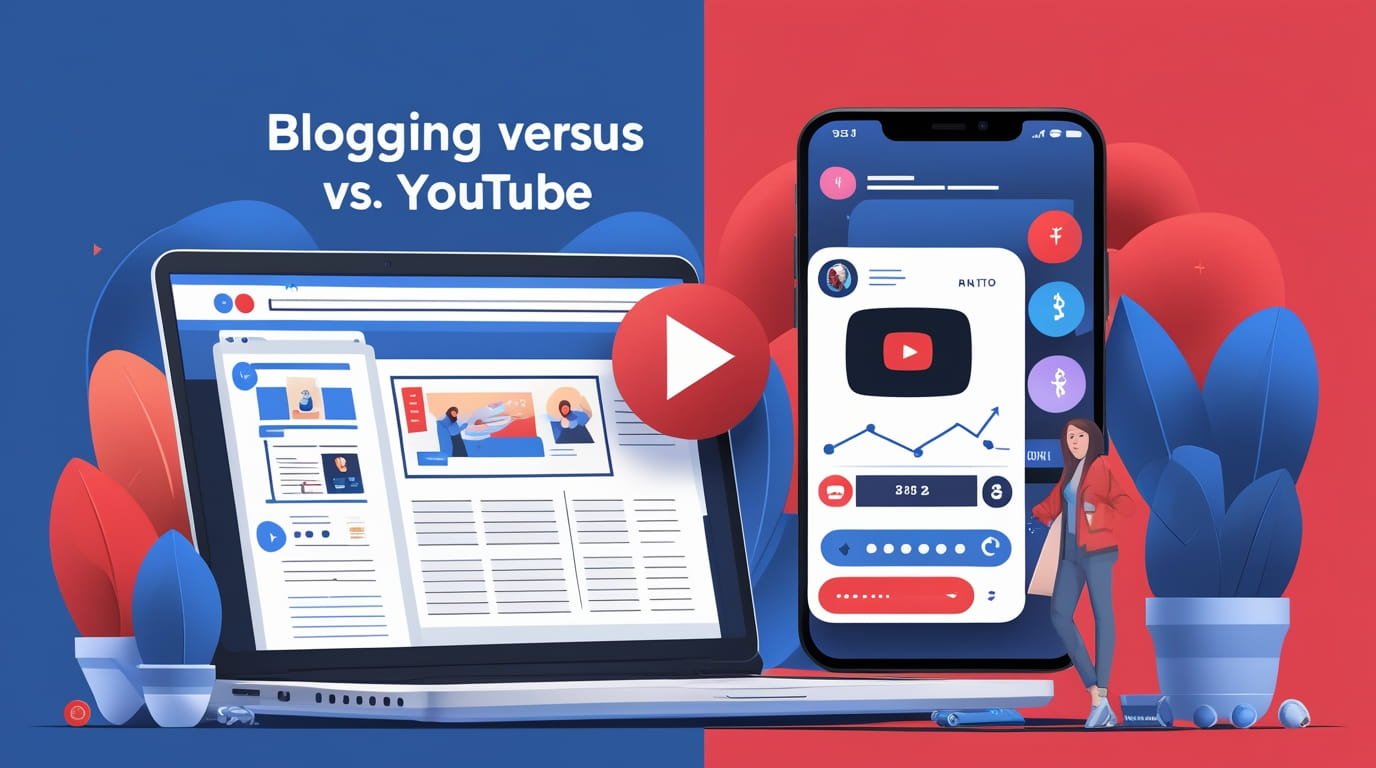
It’s a tough choice, honestly. On one hand, you have the allure of YouTube the fame, the flashy play buttons, and the fact that video seems to be taking over the entire internet. On the other hand, there’s blogging the quieter, more cerebral path where you own your platform and don't have to worry about bad hair days. If you are standing at this crossroads right now, feeling a bit overwhelmed by the advice coming from every direction, take a deep breath. There isn’t a "wrong" choice, but there is definitely a choice that fits your specific personality and goals better. Let’s break down the reality of both platforms in 2026, stripping away the hype and looking at what it actually takes to succeed as a total beginner.
The Barrier to Entry: Fear of the Lens vs. Writer’s Block
Let’s be real for a second: the biggest hurdle for most beginners isn't technical; it’s psychological. YouTube requires a level of vulnerability that can be terrifying. You are putting your face, your voice, and your mannerisms out there for the world to judge. You have to be comfortable talking to a camera lens as if it’s your best friend, which, let me tell you, feels incredibly awkward for the first fifty videos. If you are an introvert who shudders at the thought of hearing your own voice on a recording, YouTube is going to be a steep uphill battle.
Blogging, by comparison, feels like a safe haven. You can write in your pajamas, with messy hair, at 3 AM. Nobody judges your appearance; they only judge your ideas. The barrier to entry here is much lower in terms of "performance anxiety." However, blogging has its own demon: Writer’s Block. Staring at a blinking cursor on a blank white page can be just as intimidating as staring at a camera lens. But generally speaking, if you want to start today with zero anxiety about how you look or sound, blogging wins. You simply open a laptop and type. There is a specific kind of freedom in anonymity that blogging offers, which YouTube simply cannot match unless you go the faceless "cash cow" channel route, which is a whole other beast entirely.
The Gear and Tech: Wallet vs. Willpower
Here is a practical question: what is in your bank account right now? Because while people love to say, "Just start with your smartphone!", the reality of YouTube in 2026 is a bit more competitive. Yes, you can film on a phone, but audiences have been trained to expect crisp audio, decent lighting, and snappy editing. If your video sounds like you are recording inside a tin can during a windstorm, people will click off in three seconds. To really give YouTube a fair shot, you eventually need a decent microphone, some softbox lights, and a computer powerful enough to render 4K video without exploding.
Blogging? It costs next to nothing to start. If you have a computer that connects to the internet, you are fully equipped. You don't need a fancy camera. You don't need a terabyte of hard drive space for footage. The initial investment for a self-hosted WordPress site (which is what you should use) is usually the price of a cup of coffee per month for hosting. The technical skill set is also different. YouTube requires you to become a videographer, sound engineer, and editor. Blogging requires you to learn how to structure an article and maybe some basic HTML. If you are tech-averse and hate the idea of learning complex software like DaVinci Resolve or Adobe Premiere, blogging is infinitely more approachable.
The Algorithm Game: Search vs. Recommendation
This is where the two platforms diverge wildly. Understanding how people find your content is crucial to your sanity. Blogging is a slow burn. It relies heavily on Search Engine Optimization (SEO). You write an article answering a question, and you hope that Google (or these days, AI search engines) serves it to people looking for that answer. It takes time sometimes months for a new blog to "season" and start getting traffic from Google. You are essentially planting a garden and waiting for it to grow. It’s predictable, but slow.
YouTube is more like a lottery ticket with better odds. The YouTube algorithm is aggressive. It doesn't just wait for people to search for your video; it actively pushes your video to people it thinks might like it. You could have zero subscribers, upload one incredible video with a great thumbnail, and wake up to 100,000 views the next day. That viral potential simply doesn't exist in blogging in the same way. However, this comes with a downside: the "hamster wheel." YouTube demands consistency. If you stop feeding the beast, the algorithm forgets you. A blog post you wrote five years ago can still bring you passive traffic every single day without you lifting a finger. YouTube favors the "new," while blogging favors the "useful."
Monetization: How Soon Can You Quit Your Job?
Let’s talk money. We all want to turn our hobbies into income, right? The path to a dollar is very different on each platform. On YouTube, the "golden ticket" is the Partner Program (AdSense). To get there, you need 1,000 subscribers and 4,000 watch hours. For a beginner, that can take a year or more of grinding for free. It is a long, hard road before you see your first cent from ads.
Blogging is unique because you don't have to wait for an arbitrary gatekeeper to approve you. You can start affiliate marketing on Day 1. If you write a review of a camera and someone buys it through your link, you get paid. You don't need 1,000 readers; you just need one reader who trusts you.
Here is a quick breakdown of the monetization differences to make it clearer:
- Ad Revenue: YouTube pays better per 1,000 views generally, but requires a high threshold to start. Blogs need massive traffic to make good money from ads (via networks like Mediavine).
- Affiliate Marketing: Much easier to convert on blogs. People reading a "Best Laptops" article are ready to buy. People watching a video might just be browsing for entertainment.
- Sponsorships: YouTubers often get brand deals faster because video builds a stronger "parasocial" relationship. Brands love seeing a face associated with their product.
- Selling Products: Both are great, but selling a digital course or ebook is often smoother via a blog where you can capture emails easily.
The "AI" Factor: Future-Proofing Your Choice
We can't ignore the elephant in the room. Artificial Intelligence has changed everything. In the world of blogging, AI is a bit of a bully. AI chatbots can now answer simple questions like "How to boil an egg" instantly, meaning fewer people are clicking on simple blog posts. To survive as a blogger in 2026, you cannot just be a Wikipedia summary. You need to inject personal stories, unique data, and a strong "voice" that a robot can't mimic. If you just write generic info, your blog will die.
YouTube is currently more resistant to this. While AI video exists, humans still crave connection with other humans. We want to see your eyes, hear the inflection in your voice, and watch you actually do the thing you are teaching. It is much harder for AI to fake the personality and charisma of a YouTuber. If you are worried about automation stealing your lunch, YouTube offers a slightly stronger defensive moat right now because it relies on your unique physical presence. However, AI is also a YouTuber's best friend it can edit your clips, fix your audio, and generate your thumbnails, making the workflow faster than ever.
Lifestyle Design: Which Life Do You Want?
Ultimately, this decision comes down to the kind of life you want to lead. A blogger’s life is flexible and quiet. You can write your articles in batches, schedule them for a month, and go on vacation. It is easier to disconnect. You can act anonymously. If you want to stop blogging, you can sell the website for a lump sum (often 30-40x your monthly profit). It is a sellable asset.
A YouTuber’s life is louder and more demanding. You are the face of the brand. It is very hard to sell a YouTube channel that is named after you and features your face in every video. If you stop filming, the channel stops growing. You are recognized in public (eventually). But, the highs are higher. The fan connection is deeper. You build a tribe of people who genuinely care about you, not just your information. If you crave community and fame, YouTube is the vehicle. If you crave freedom and asset building, blogging is the vehicle.
Conclusion: You Don't Have to Choose Forever
If you are still stuck, here is a little secret: the most successful creators eventually do both. They are the "Hybrid" creators. They might start a YouTube channel to build a brand and then start a blog to capture the search traffic and sell products. Or they start a blog, realize they have a knack for explaining things, and turn their articles into video scripts.
Don't feel like this is a blood oath you are signing. Pick the one that feels the least painful to start today. If the thought of editing video makes you want to cry, start a blog. If the thought of writing 2,000 words makes you want to sleep, start a YouTube channel. The most important metric for a beginner isn't "potential earnings" or "traffic sources" it is "sustainability." Which platform can you see yourself actually sticking with for the next 12 months, even if nobody is watching? Pick that one. The internet rewards consistency above all else. Just start. You can always pivot later.
Frequently Asked Questions (FAQ)
1. Is blogging dead in 2026?
No, absolutely not. "Generic" blogging is dead, but personal, authoritative blogging is alive and well. People are tired of AI-generated slop; they are actively searching for human experiences, real reviews, and authentic stories. If you have a unique perspective, there is still plenty of room for you.
2. Can I start a YouTube channel without showing my face?
Yes. "Faceless" channels (like meditation, gaming, tutorials, or video essays using stock footage) are a huge category. However, they are harder to build a personal brand around. It might take longer to build trust because viewers can't see who is talking to them, but it is definitely possible and profitable.
3. Which platform is faster to make money on?
Generally, blogging offers a faster route to the first dollar because of affiliate marketing. You can put a link in your first post. YouTube takes longer to monetize because of the subscriber/watch hour requirements for ad revenue, though you can put affiliate links in video descriptions immediately too.
4. Can I just use ChatGPT to write my blog posts?
You can, but you shouldn't rely on it 100%. Google and readers are getting very good at spotting "robot writing." It lacks soul, nuance, and real-life examples. Use AI as an assistant to brainstorm or outline, but do the actual writing yourself to build a connection with your audience.
5. How much time do I need to commit per week?
For a beginner to see traction, aim for at least 5-10 hours a week. On YouTube, that might mean producing one good video a week. On a blog, that might mean writing two high-quality articles. Consistency matters more than the total hours; showing up every single week is the key.