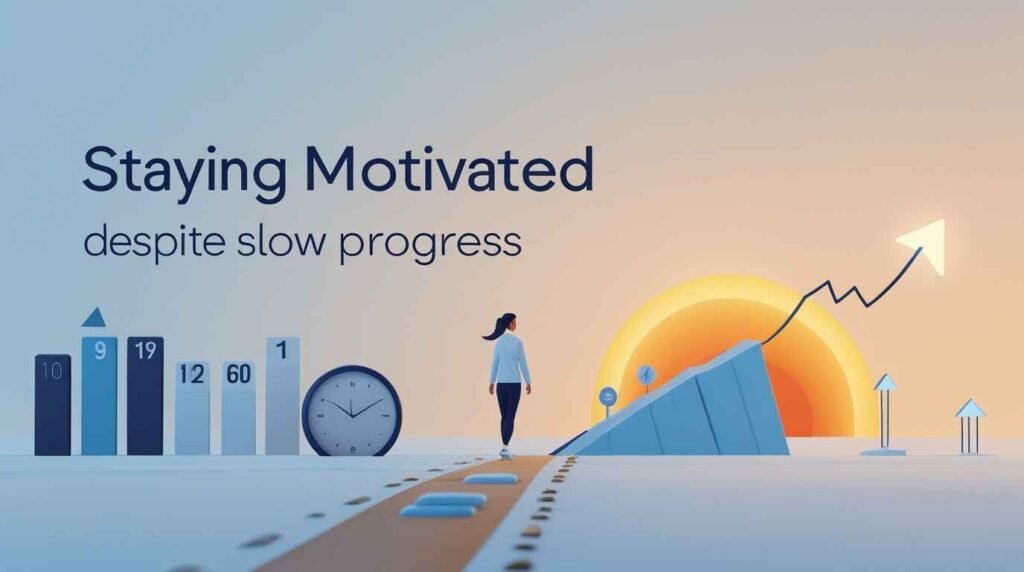


How to Set Realistic Goals and Achieve Them Step by Step
We have all been there. It’s usually late at night, or perhaps the first day of a new year, and a sudden surge of motivation hits you like a freight train. You grab a notebook and start scribbling down a list of things you are going to change. "I’m going to lose 30 pounds," you promise yourself. "I’m going to learn Japanese, save $10,000, and finally write that novel." It feels amazing, doesn't it? Just writing it down gives you a little dopamine hit. You feel like a new person already.
But then, two weeks pass. The alarm goes off at 6:00 AM for that morning run, and it’s cold outside. The Japanese textbook is gathering dust because you’re tired after work. The motivation evaporates, and you are left with the crushing realization that you have bitten off way more than you can chew. This cycle of excitement followed by shame is incredibly common, but it doesn't mean you are lazy or incapable. It just means you are bad at setting goals. The problem isn't your willpower; it’s your strategy. We tend to set goals for the person we want to be, rather than the person we actually are right now. To break this cycle, we need to stop relying on hype and start relying on a realistic, step-by-step system.
The Difference Between a Wish and a Goal
The first step in setting a realistic goal is understanding the difference between a dream and a plan. "I want to be rich" is a wish. "I want to save $500 a month by cutting out takeout coffee and investing in an index fund" is a goal. One is a vague feeling; the other is a set of instructions. When our goals are vague, our brains don't know what to do with them. If you tell your brain "get healthy," it panics because that could mean anything. Does it mean eating kale? Running a marathon? Sleeping more?
To make a goal achievable, you have to get specific. This is often called the SMART criteria (Specific, Measurable, Achievable, Relevant, Time-bound), but let’s look at it more simply. You need to define the "Done State." How will you know when you have achieved it? If your goal is to read more, a realistic version is "Read 10 pages every night before bed." It’s binary. You either did it, or you didn't. There is no gray area for your brain to hide in. By removing the ambiguity, you remove the hesitation that often leads to procrastination.
The "Salami Slice" Method of Progress
Imagine someone put a giant, whole salami in front of you and told you to eat it in one bite. You couldn't do it. You’d choke. But if you sliced that salami into thin, manageable pieces, you could eat the whole thing over the course of an afternoon without much trouble. Big goals work the exact same way. We often fail because we stare at the mountain and get overwhelmed by the height, rather than just looking at the ground three feet in front of us.
If your goal is to write a book, the thought of writing 80,000 words is terrifying. But writing 500 words? You can do that in your lunch break. This is called "chunking." You need to break your massive objective down into tiny, boring, unsexy steps. The smaller the step, the less resistance you will feel. If you want to declutter your entire house, don't say "I’m cleaning the house this weekend." Say, "I am going to clean the junk drawer in the kitchen on Saturday morning." Once you finish that small task, you get a sense of accomplishment. That feeling fuels you to tackle the next drawer, and then the next room. Momentum is built on small wins, not giant leaps.
Why Motivation Is a Fair-Weather Friend
Here is a hard truth: you cannot rely on motivation. Motivation is an emotion, and like all emotions, it is fleeting. It comes and goes depending on how much sleep you got, what you ate for lunch, or whether it’s raining outside. If you only work on your goals when you "feel like it," you will never finish anything. You need to build a system that works even when you are tired, grumpy, and uninspired.
This brings us to the concept of habits over intensity. Consistency beats intensity every single time. It is better to study Spanish for 15 minutes every day than to study for five hours once a week and then quit because your brain is fried. You need to lower the barrier to entry. Make your goal so easy that it feels ridiculous not to do it. If you want to start flossing, make your goal to floss just one tooth. Seriously. It sounds silly, but once you are in the bathroom with the floss in your hand, you’ll probably do the rest. But on the hard days, if you just floss that one tooth, you kept the streak alive. You are building the identity of someone who shows up, regardless of how they feel.
A Practical Checklist for Your First Week
So, how do you actually launch this without falling off the wagon? You need a launch plan that accounts for real life. You aren't a robot, and things will go wrong. Preparing for the obstacles is just as important as planning the success.
Here is a simple structure to get your first week sorted:
- Write it down physically: There is something psychological about putting pen to paper. It makes the contract with yourself real.
- Identify the "Why": Why do you want this? If it’s just to impress others, you will quit. It has to be for you.
- Predict the obstacles: What usually stops you? Is it your phone? Is it fatigue? Identify the blockers now so you can dodge them later.
- Schedule the "When": Don't just say "I'll do it this week." Put it in your calendar. "Tuesday at 7:00 PM" is an appointment you can't miss.
- Find an Accountability Partner: Tell a friend who won't let you off the hook easily. Shame is a powerful motivator in the beginning!
The Trap of Perfectionism
Perfectionism is just procrastination wrapped in a fancy coat. We often tell ourselves, "If I can't do it perfectly, I shouldn't do it at all." This is the "all-or-nothing" mentality, and it is the death of progress. You miss one workout, so you decide the whole week is ruined and eat a pizza. You overspend your budget by $10, so you decide to go on a shopping spree because "I already failed."
You have to adopt the mindset of a scientist. If an experiment fails, a scientist doesn't cry and quit their job; they look at the data. If you miss a day, ask yourself why. Did you stay up too late? Did you forget to pack your gym bag? Adjust the variable and try again. A goal is not a fragile vase that shatters the moment you drop it. It’s a road. If you take a wrong turn, you don't drive your car into a ditch; you just make a U-turn and get back on the highway. Give yourself permission to be imperfect. A C-minus workout is infinitely better than a zero. The only bad workout is the one that didn't happen.
Review, Reflect, and Pivot
As you move forward, you need to check in with yourself. A goal you set in January might not make sense in July. Maybe you got injured, maybe you changed jobs, or maybe you just realized you hate learning the guitar and would rather learn the piano. That is allowed! Changing your goal isn't quitting; it’s pivoting.
Set a regular time maybe every Sunday evening to look at your progress. Be honest about what is working and what isn't. If you find you are constantly missing your goal, don't beat yourself up. Instead, lower the difficulty setting. If you can't run 5 miles, aim for 2. If you can't save $500, save $50. The objective is to keep moving forward, no matter how slow the pace. Adjusting your target to match your reality is a sign of intelligence, not weakness.
Conclusion: The Journey Is the Point
Ultimately, achieving a goal isn't just about the trophy at the end. It’s about who you become in the process. When you set a realistic goal and stick to it, you are proving to yourself that you can trust your own word. You are building self-confidence, discipline, and resilience.
Don't rush the process. We live in a world of instant gratification, where we can get food delivered in 20 minutes and watch a movie in seconds. Personal growth doesn't work that way. It is slow, messy, and sometimes boring. But if you take it one step at a time, celebrate the small wins, and forgive yourself for the slip-ups, you will look back a year from now and be amazed at how far you have traveled. Start small, start today, and just keep putting one foot in front of the other.
Frequently Asked Questions (FAQ)
1. What if I have too many goals I want to achieve?
This is a common trap. If you try to change everything at once, you will likely change nothing. Pick one major goal (or two small ones) to focus on at a time. Once those become habits (usually after 60-90 days), you can add a new one into the mix. Focus is your friend.
2. How do I get back on track after a long break?
Don't wait for a "fresh start" date like a Monday or the first of the month. Start immediately, but start small. If you stopped running for a month, don't try to run 5k today. Go for a 10-minute walk. Rebuild the habit of showing up before you worry about performance.
3. Is it better to tell people my goals or keep them secret?
It depends on your personality. For some, telling people creates positive pressure (accountability). for others, telling people gives a premature sense of accomplishment (a fake dopamine hit) which lowers motivation. A good middle ground is to tell one supportive person who will hold you accountable, rather than posting it to everyone on social media.
4. How do I know if my goal is realistic?
Ask yourself: "On my worst day when I'm tired, stressed, and busy can I still achieve a version of this goal?" If the answer is no, it might be too ambitious. Scale it back until the answer is a "probably." You can always scale up later.
5. What should I do when I lose motivation completely?
Revisit your "Why." Remind yourself of the pain of staying the same versus the pleasure of changing. Also, rely on discipline rather than motivation. Sometimes you just have to do the work like a robot, without thinking about how you feel. Action often creates motivation, not the other way around.